
Explore huge range of books of your medical specialty in below categories
Description
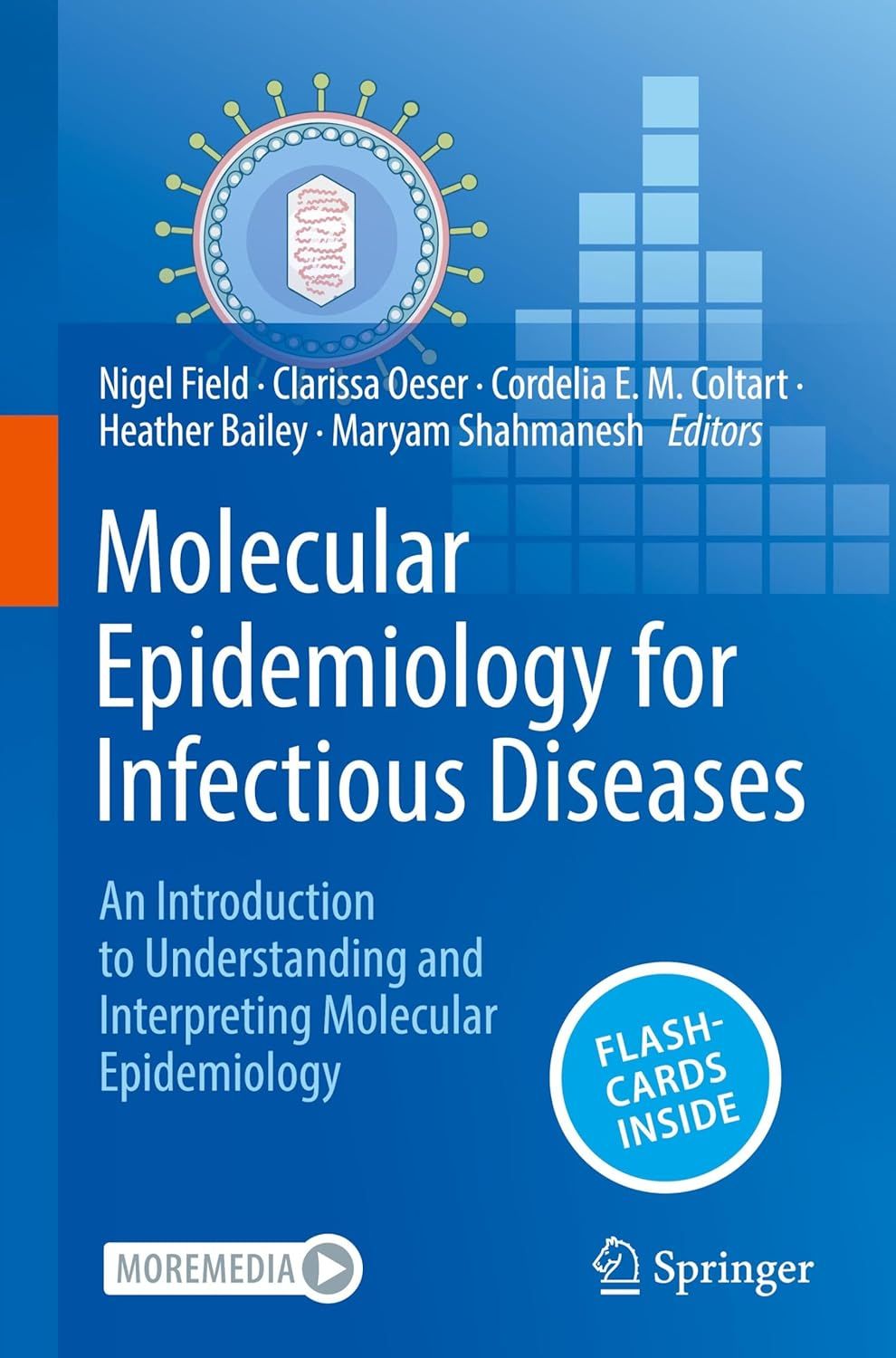
by Nigel Field (ed.), Clarissa Oeser (ed.), Cordelia E. M. Coltart (ed.), Heather Bailey (ed.), Maryam Shahmanesh (ed.)
This textbook introduces the reader to molecular epidemiology as a field that improves our understanding of infectious diseases, their natural history, and their control. The sudden onset of the COVID-19 pandemic prompted an increased awareness about epidemiology and molecular biology. Policy makers have required specialist knowledge to assess the evolving situation and make informed judgements about the clinical and public health implications.
This book bridges the gap between primary research and advanced graduate textbooks.
The field of molecular epidemiology has developed at the interface between epidemiology and molecular biology as high throughput molecular techniques have become cheaper and increasingly sophisticated for typing pathogen strains and characterising the host immune response. At the same time, bioinformatics and statistical methods have evolved so these complex and high-dimensional data can be analysed in combination with classical epidemiological data on time, person, and place. However, the analysis of datasets combining classical epidemiological and molecular data is highly specialised. Few postgraduate courses cover this topic in sufficient detail to allow meaningful interpretation.
This textbook introduces the major methods used to generate molecular datasets and the epidemiological and statistical concepts that are used to link these data with clinical and behavioural data. An introductory chapter explains key terms, definitions and the challenges of accurate and reproducible measurements in microbiology (metrology) and reviews the development of molecular epidemiology as a field and its history. Subsequent chapters introduce the readers to pathogen phylogenetics, host transcriptomics, proteomics, serology, and the microbiome. An additional chapter covers the ethical issues that arise when using molecular data combined with epidemiological and clinical information. The concluding chapter takes a look at the bigger picture and considers the contributions of molecular epidemiology to infectious disease control and health policy.
Additional questions and answers via app: Download the Springer Nature Flashcards app free of charge and use exclusive additional material to test your knowledge.
I received my Ebooks within 15 min. Thank you!
It was great service, I will highly recommend all of my colleagues
La compran fue muy fácil y la entrega súper rápida. El libro esta muy bien. Buenas explicaciones y muy buen contenido. Recomiendo mucho este sitio para comprar.
Great and fast like always!
Excellent service, very easy payment, super fast delivery. Excellent book to review, clinical cases with explanation.
Medical eBook House
Medical eBook House is the Best online medical books resource which serves medical professionals in providing Ebooks, video courses/ Lectures of all kinds in various languages on their demand at very reasonable prices.